
How Often Should Smoke Detectors Be Replaced?
How Often Should Smoke Detectors Be Replaced?
Smoke alarms are one of the most important life safety devices in your home. They provide early warning during a fire, giving your family valuable time to escape. However, many homeowners don't realize that smoke alarms have a limited lifespan.
Even if your smoke detector still beeps when you press the test button, its internal sensing components gradually become less reliable as they age. That's why fire safety organizations across the United States recommend replacing residential smoke alarms every 10 years from the date of manufacture.
If you're unsure how old your smoke alarms are, or you've recently purchased a home, this guide will help you determine when replacement is necessary and what type of smoke alarm is best for your home.
Quick Answer
Most residential smoke alarmsshould be replaced every 10 years from the manufacturing date—not the installation date.

Smoke Detectors showing very old to old to new smoke alarms.
In addition:
Test alarms monthly.
Replace replaceable batteries at least once a year (or whenever the alarm chirps).
Replace any alarm that fails testing, has visible damage, or is more than 10 years old.
Why Smoke Detectors Expire
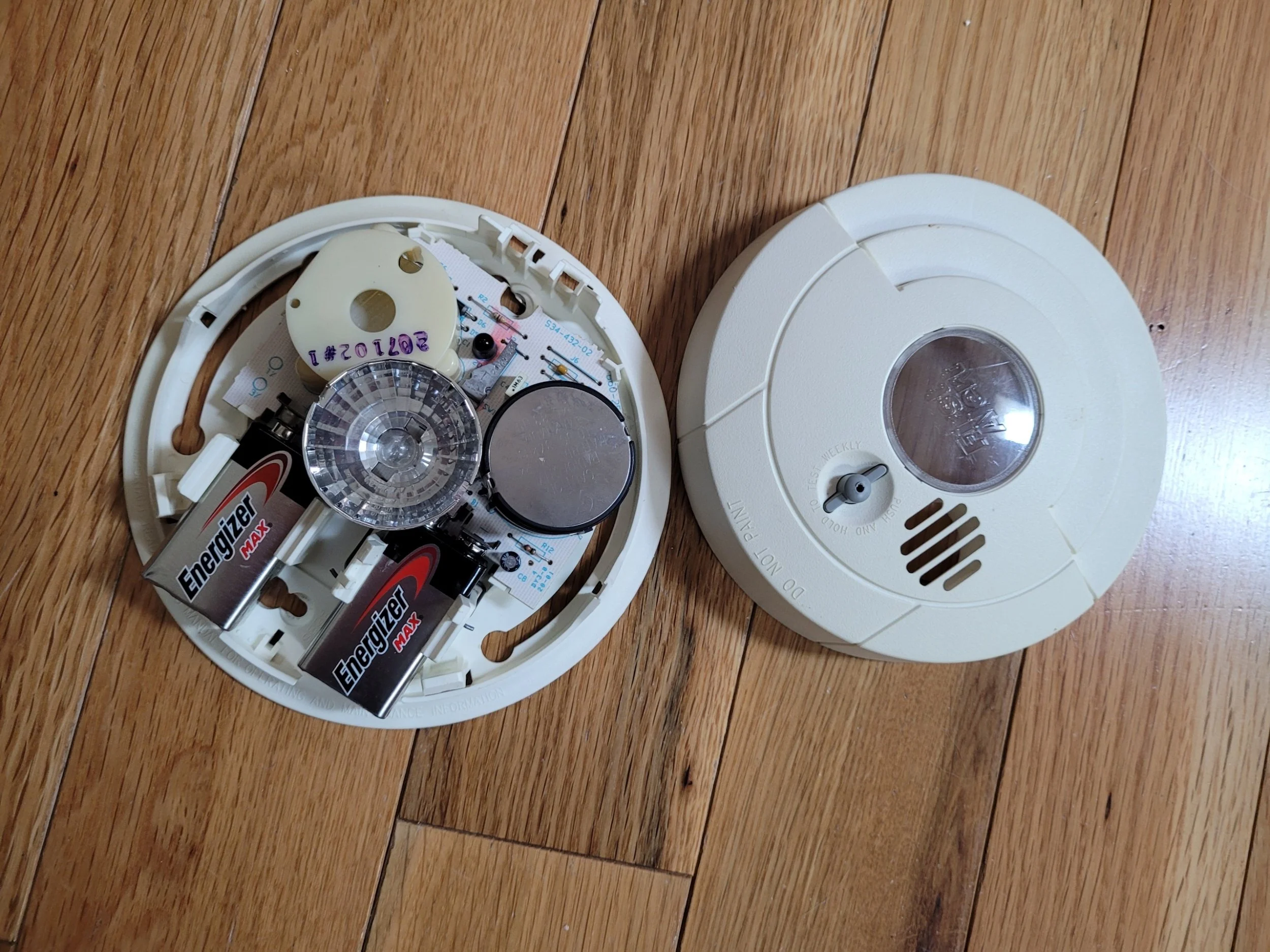
Pictured here is a very old alarm that tested when the button was pushed, but failed to work when smoke was present.
Many homeowners believe that if the test button works, the alarm is still reliable.
Unfortunately, that's not true.
Smoke alarms contain electronic sensing components that slowly degrade due to:
Dust accumulation
Humidity
Temperature changes
Airborne contaminants
Aging electronic circuitry
The alarm's horn may still sound during a test, but the smoke sensor itself can become less sensitive over time. This is why manufacturers and fire safety organizations recommend replacing the entire unit after approximately 10 years.
How to Find the Age of Your Smoke Alarm
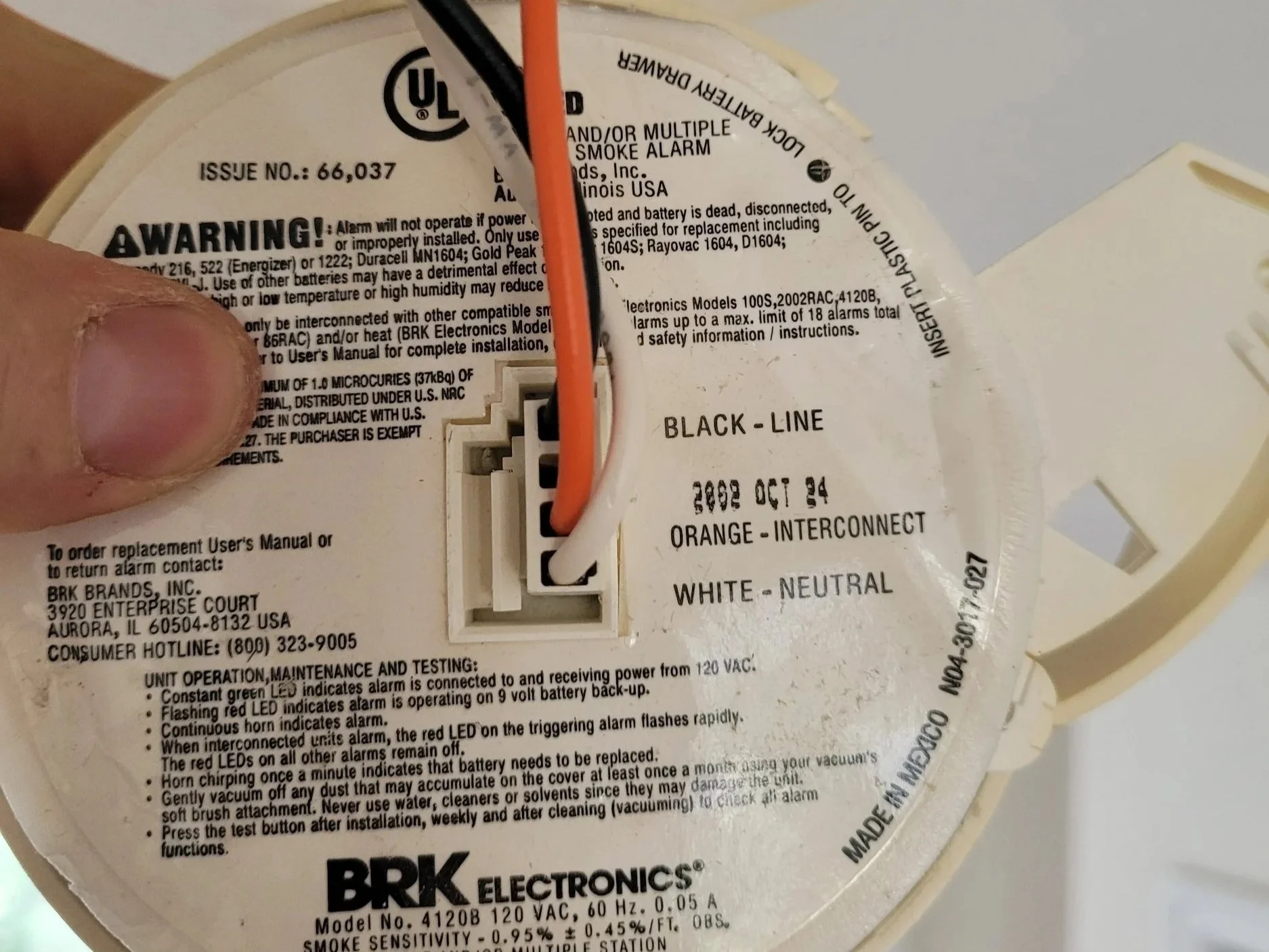
Every alarm has a date of manufacture on the back, this tells you how old the alarm is. After 10year replace it.
Most homeowners are surprised to discover their alarms are much older than they thought.
Checking is simple:
Remove the alarm from its mounting bracket.
Turn it over.
Locate the manufacturing date stamped on the back.
If the date is 10 years old or older, replace it.
Many newer alarms also display an "End of Life" message or begin chirping repeatedly when replacement is due.
Warning Signs Your Smoke Alarm Needs Replacement
Replace your smoke alarm immediately if you notice:
It is over 10 years old.
It fails the test button.
It chirps after installing a new battery.
It has yellowed or become brittle.
It has been exposed to heavy smoke, grease, or water damage.
It has visible cracks or broken parts.
The manufacturer has issued a recall.
Missouri Recommendations
For homeowners in Missouri, the Missouri Division of Fire Safety recommends:
Testing smoke alarms monthly.
Replacing batteries at least annually (for models with replaceable batteries).
Replacing smoke alarms every 10 years.
Installing smoke alarms inside every bedroom, outside sleeping areas, and on every level of the home.
What Happens if You Don't Replace Them?
Older smoke alarms may:
Detect smoke more slowly.
Fail to activate during a fire.
Create nuisance alarms.
Stop functioning without obvious warning.
Considering that modern smoke alarms often cost far less than the value of the protection they provide, replacing aging alarms is one of the simplest safety improvements a homeowner can make.
Choosing the Right Replacement
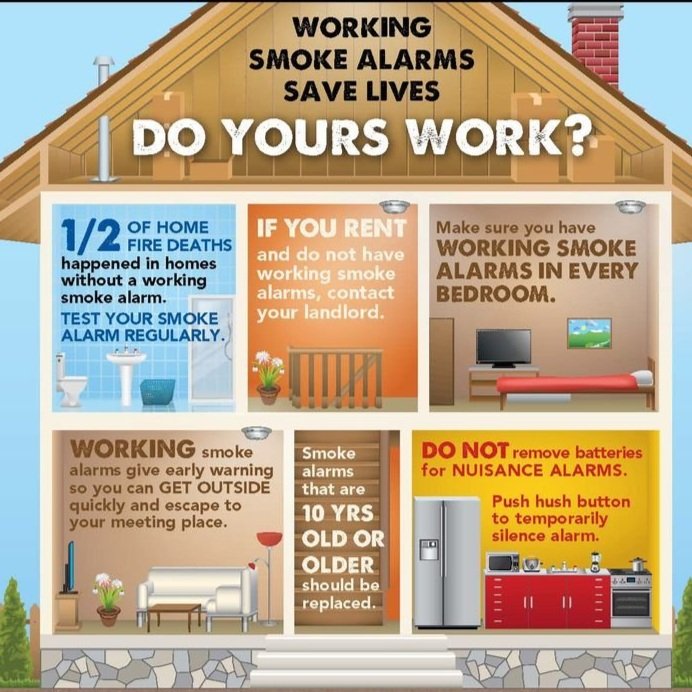
How fire deaths without working smoke detectors
Studies show that more than 60 percent of deadly U.S. fires occur in homes that do not have smoke alarms installed or have alarms that do not function because of missing batteries, dead batteries or some other problem that keeps them from working properly. According to the National Fire Protection Association (NFPA), 40 percent of U.S. residential fire deaths result from fires in homes with no smoke alarms, while 23 percent occurred in homes without working smoke alarms.
National statistics show:
On average, home fires kill 540 children ages 14 and under each year.
80 percent of the children who die in home fires are killed in homes without working smoke alarms.
From 11 p.m. – 7 a.m., when people tend to be asleep and the home is dark, are the peak hours for home fire deaths.
Only 23 percent of U.S. families have developed and practiced a home fire escape plan.
Smoke alarms should be installed in every bedroom, outside each separate sleeping area and on every level of the home, including the basement. The NFPA also recommends that families interconnect all smoke alarms throughout the home so that if one alarm sounds, they all sound.
To ensure fire safety, families should regularly check smoke detectors by pushing the test button, plan at least two escape routes from their homes and practice those escape routes with the entire family. Batteries should be changed at least once a year and tested monthly to ensure that they are operating properly. per Missouri State Fire Marshall office
Today's smoke alarms offer many improvements over older models, including:
10-year sealed batteries
Hardwired battery backup
Smart smoke alarms
Voice alerts
Selecting the right option depends on your home's age, wiring, layout, and local building requirements.
Professional Installation vs DIY
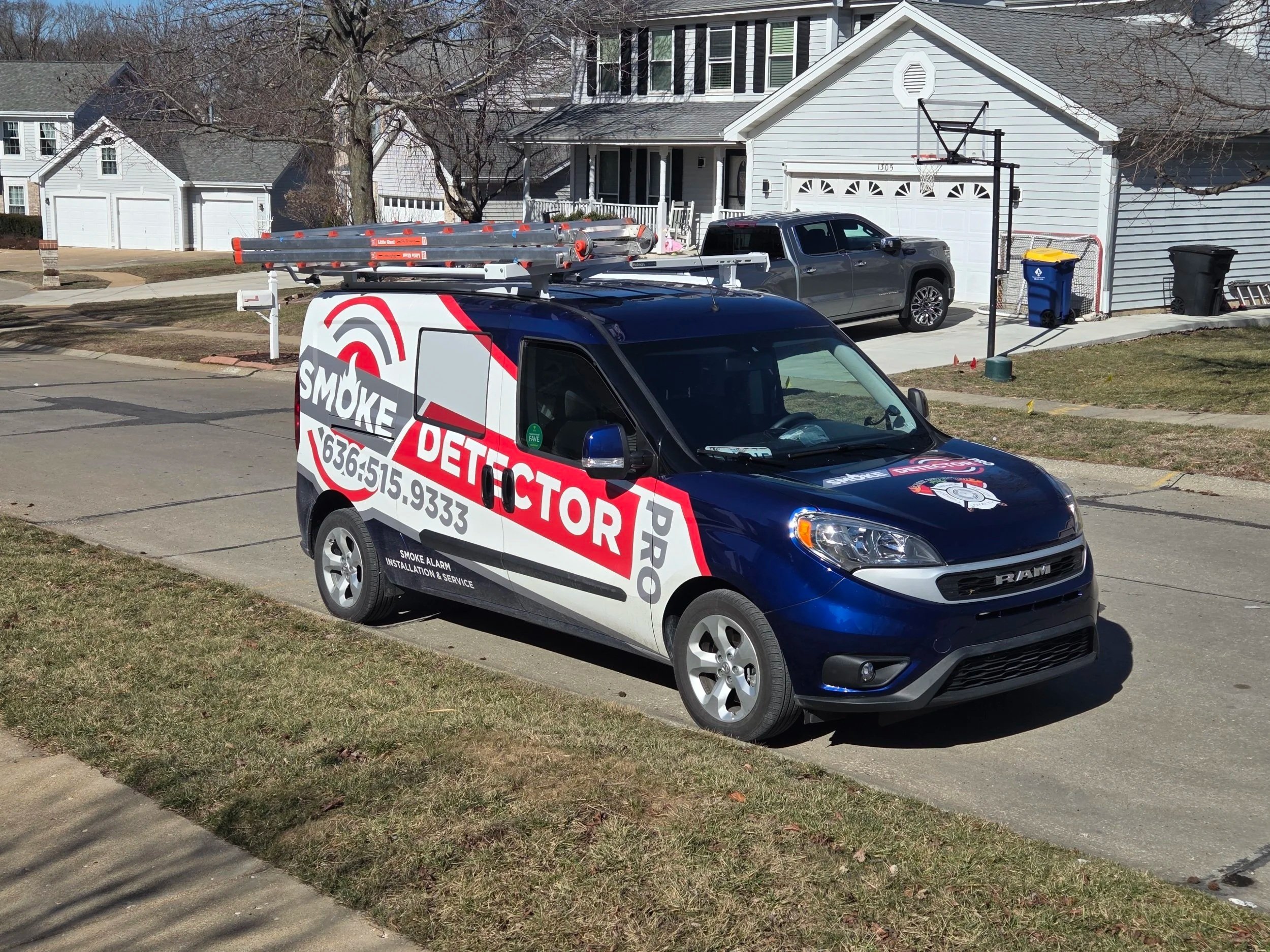
Smoke Detector Pro servicing a home is Fenton, MO
Many battery-powered alarms can be installed by homeowners.
However, professional installation is often recommended for:
Large homes
Multi-story homes
Homes needing code upgrades
A professional installer can also verify proper placement, test every alarm, and ensure the system operates as intended.
Local Fire Safety Tips for Missouri Homeowners
If you live in St. Charles County, St. Louis County, or surrounding communities, consider these additional steps:
Replace all smoke alarms at the same time if they are nearing the end of their service life.
Install interconnected alarms so every alarm sounds during an emergency.
Pair smoke alarms with carbon monoxide alarms on every level.
Practice your family's escape plan twice each year.
Schedule periodic fire safety inspections, especially after remodeling or purchasing an older home.
Local to us
Homeowners in St. Charles County, St. Louis County, O'Fallon, Wentzville, St. Peters, Chesterfield, Wildwood, Ballwin, Cottleville, Lake St. Louis, and surrounding communities should periodically check the manufacture date on every smoke alarm in their home. Many homes built in the early 2000s now have alarms that are beyond their recommended service life and should be replaced.
Frequently Asked Questions
Can smoke detectors work after 10 years?
Some may still function, but manufacturers and fire safety organizations recommend replacement after 10 years because the sensing components become less reliable and stopped functioning all together.
Where is the manufacture date?
Typically on the back or side of the alarm housing.
Do hardwired smoke alarms expire?
Yes. Even hardwired alarms with battery backup should generally be replaced every 10 years.
Should I replace all smoke alarms at the same time?
If they were installed together, replacing them all at once makes future maintenance easier and helps ensure consistent performance.
How often should I test smoke alarms?
Press the test button once every month. Replace batteries as needed or at least annually for models with replaceable batteries.
Frequently Asked Questions About Smoke Detector Replacement
Can smoke detectors last longer than 10 years?
While some smoke alarms may continue to beep and pass the test button after 10 years, that does not mean they are still providing reliable protection. The internal smoke-sensing components gradually lose sensitivity due to age, dust, humidity, and environmental contaminants. Because of this, the U.S. Fire Administration and the Missouri Division of Fire Safety recommend replacing residential smoke alarms every 10 years from the date of manufacture, even if they appear to be working normally.
Replacing an aging smoke alarm is a relatively inexpensive way to help ensure your home has dependable fire detection when it matters most.
Helpful Resources:
U.S. Fire Administration – Smoke Alarms: https://www.usfa.fema.gov/prevention/home-fires/prepare-for-fire/smoke-alarms/
Missouri Division of Fire Safety: https://dfs.dps.mo.gov/safetytips/smoke-carbon-monoxide-alarms.php
How do I know if my smoke detector is expired?
The easiest way is to check the manufacturing date printed on the back or side of the alarm. This date—not the installation date—is used to determine when replacement is due.
If the alarm was manufactured 10 or more years ago, it should be replaced. Many newer smoke alarms also have an "End of Life" warning that chirps at regular intervals when replacement is needed.
Other signs it may be time for a replacement include:
The alarm fails the monthly test.
The alarm continues chirping after installing a new battery.
The housing is cracked, brittle, or damaged.
You cannot find a manufacturing date.
Helpful Resources:
U.S. Fire Administration – Smoke Alarm Maintenance: https://www.usfa.fema.gov/prevention/home-fires/prepare-for-fire/smoke-alarms/
Why is my smoke detector yellow?
Smoke alarms naturally discolor as they age. White plastic contains flame-retardant chemicals that slowly react to heat, sunlight, and oxygen, causing the housing to turn yellow over time.
While yellowing alone doesn't necessarily mean the alarm has failed, it is often an indication that the alarm is older. If the unit is approaching or beyond 10 years old, replacement is recommended regardless of whether it still appears to function.
When in doubt, check the manufacturing date on the back of the unit.
Should I replace all smoke alarms at once?
Yes—if they were installed around the same time.
Replacing every alarm at once offers several benefits:
All alarms have the same remaining lifespan.
Maintenance becomes much easier.
Interconnected alarms perform consistently.
Your entire home receives updated protection.
You avoid replacing one alarm every few months as others reach the end of their service life.
If one alarm in your home has expired, it's a good idea to check the dates on every other alarm as well.
Do hardwired smoke alarms expire?
Yes.
Many homeowners assume that because an alarm is wired into their home's electrical system, it will last forever. While hardwired alarms receive constant electrical power, the smoke sensor inside the alarm still ages.
Most manufacturers recommend replacing hardwired smoke alarms every 10 years from the manufacture date. The backup battery should also be replaced according to the manufacturer's instructions if the model uses a replaceable battery.
Helpful Resources:
U.S. Fire Administration – Hardwired Smoke Alarm Maintenance: https://www.usfa.fema.gov/prevention/home-fires/prepare-for-fire/smoke-alarms/
Do smart smoke alarms expire?
Yes.
Smart smoke alarms use advanced electronics, Wi-Fi connectivity, and smartphone notifications, but they still rely on smoke sensors that have a limited service life.
Depending on the manufacturer and model, many smart smoke alarms are designed to be replaced after approximately 10 years. Always follow the replacement recommendations provided by the manufacturer.
Testing your smart alarm monthly and keeping the software updated can help ensure reliable operation throughout its lifespan.
How much does smoke detector replacement cost?
The total cost depends on the type of alarm and the installation requirements.
Typical price ranges include:
Battery-operated smoke alarms
10-year sealed battery smoke alarms
Hardwired smoke alarms
Combination smoke and carbon monoxide alarms
Wireless interconnected systems
Smart smoke alarm systems
Professional installation may also include testing, code-compliance verification, proper placement, and disposal of old alarms.
At Smoke Detector Pro, we recommend replacing outdated alarms with modern interconnected systems whenever practical to improve whole-home fire protection.
Can I replace smoke detectors myself?
Many homeowners can safely replace battery-powered smoke alarms by following the manufacturer's instructions.
However, professional installation is often recommended when:
Replacing hardwired alarms
Upgrading to interconnected systems
Installing wireless alarm networks
Adding carbon monoxide protection
Performing a whole-home upgrade
Bringing an older home into compliance with current recommendations
A professional installation also ensures every alarm is tested and properly located.
What type of smoke detector should I buy?
The best smoke alarm depends on your home's layout, wiring, and safety goals.
Common options include:
10-Year Sealed Battery Smoke Alarms – Excellent for easy maintenance.
Hardwired Smoke Alarms – Ideal for homes with existing wiring.
Combination Smoke & Carbon Monoxide Alarms – Protect against two common household hazards.
Wireless Interconnected Smoke Alarms – Excellent for existing homes without hardwired interconnection.
Smart Smoke Alarms – Provide smartphone alerts and advanced monitoring features.
The U.S. Fire Administration recommends interconnected smoke alarms so that when one alarm activates, every alarm in the home sounds.
How often should I test my smoke detectors?
Smoke alarms should be tested at least once every month by pressing and holding the test button until the alarm sounds. Monthly testing helps confirm that the alarm has power and that the audible warning is functioning properly.
In addition to monthly testing:
Clean smoke alarms regularly using a vacuum or soft brush to remove dust.
Replace replaceable batteries whenever the alarm chirps or according to the manufacturer's instructions.
Replace the entire smoke alarm when it reaches 10 years from the manufacture date.
Testing your smoke alarms only takes a few seconds each month and is one of the easiest ways to help protect your family.
Helpful Resources:
U.S. Fire Administration – Smoke Alarm Maintenance: https://www.usfa.fema.gov/prevention/home-fires/prepare-for-fire/smoke-alarms/ (usfa.fema.gov)
Missouri Division of Fire Safety: https://dfs.dps.mo.gov/safetytips/smoke-carbon-monoxide-alarms.php (dfs.dps.mo.gov)
Where should smoke detectors be installed in my home?
For the best protection, smoke alarms should be installed:
Inside every bedroom
Outside each sleeping area
On every level of the home, including the basement
At the top of stairways
High on ceilings or on walls following the manufacturer's installation instructions
Avoid installing smoke alarms directly next to bathrooms, cooking appliances, ceiling fans, windows, or HVAC vents, as these locations can cause nuisance alarms or reduce detection performance.
Interconnected smoke alarms provide the highest level of protection because when one alarm detects smoke, every alarm in the home sounds.
Helpful Resources:
U.S. Fire Administration – Smoke Alarm Placement: https://www.usfa.fema.gov/prevention/home-fires/prepare-for-fire/smoke-alarms/ (usfa.fema.gov)
National Fire Protection Association (NFPA) – Smoke Alarms: https://www.nfpa.org/education-and-research/home-fire-safety/smoke-alarms (nfpa.org)
What is the difference between a smoke detector and a smoke alarm?
Many people use the terms interchangeably, but they have different meanings.
A smoke detector is the sensing component that detects smoke particles.
A smoke alarm is the complete device that contains the detector, electronics, and audible alarm designed to warn occupants.
In residential homes, the devices installed on ceilings are technically smoke alarms. However, because many homeowners search for "smoke detector," both terms are commonly used throughout the fire safety industry.
Helpful Resources:
National Fire Protection Association – Smoke Alarm Education: https://www.nfpa.org/education-and-research/home-fire-safety/smoke-alarms (nfpa.org)
Should I replace my smoke alarms after a house fire or major renovation?
Yes. Smoke alarms exposed to fire, excessive smoke, high heat, water damage, paint overspray, drywall dust, or heavy construction debris should be carefully inspected and often replaced.
Smoke particles and debris can contaminate the sensing chamber, reducing the alarm's ability to detect smoke accurately. Even if the alarm appears to function normally, replacement may be the safest option after significant exposure.
If you're remodeling your home, it's also a good opportunity to verify that your smoke alarm locations meet current recommendations and to consider upgrading to interconnected smoke alarms.
Helpful Resources:
U.S. Fire Administration – Home Fire Safety: https://www.usfa.fema.gov/prevention/home-fires/ (usfa.fema.gov)
Consumer Product Safety Commission – Smoke Alarms: https://www.cpsc.gov/Regulations-Laws--Standards/Voluntary-Standards/Smoke-Alarms (cpsc.gov)
Why should I choose a professional smoke alarm installation?
While many homeowners can install basic battery-operated smoke alarms, professional installation provides additional peace of mind and helps ensure your home's fire protection system is working as intended.
A professional installer can:
Verify proper smoke alarm placement.
Check that all alarms are interconnected when applicable.
Recommend the right smoke and carbon monoxide alarms for your home's layout.
Test every alarm before completion.
Identify outdated or non-compliant alarms.
Help improve your home's overall fire safety.
For homeowners in St. Charles County, St. Louis County, and surrounding Missouri communities, professional installation can also simplify whole-home upgrades and provide confidence that every level of the home is protected.
Helpful Resources:
U.S. Fire Administration – Smoke Alarm Safety: https://www.usfa.fema.gov/prevention/home-fires/prepare-for-fire/smoke-alarms/ (usfa.fema.gov)
Missouri Division of Fire Safety: https://dfs.dps.mo.gov/safetytips/smoke-carbon-monoxide-alarms.php (dfs.dps.mo.gov)
Helpful Resources:
U.S. Fire Administration – Choosing Smoke Alarms: https://www.usfa.fema.gov/prevention/home-fires/prepare-for-fire/smoke-alarms/
What does Missouri recommend?
The Missouri Division of Fire Safety recommends that homeowners:
Install smoke alarms inside every bedroom.
Install smoke alarms outside each sleeping area.
Install smoke alarms on every level of the home, including the basement.
Test smoke alarms monthly.
Replace replaceable batteries at least once a year.
Replace smoke alarms every 10 years.
Practice a home fire escape plan with every member of the household.
For even greater protection, interconnected smoke alarms are encouraged so that every alarm sounds simultaneously when smoke is detected.
Helpful Resources:
Missouri Division of Fire Safety – Smoke & Carbon Monoxide Alarms: https://dfs.dps.mo.gov/safetytips/smoke-carbon-monoxide-alarms.php
Missouri Division of Fire Safety FAQs: https://dfs.dps.mo.gov/about/faqs.php
U.S. Fire Administration: https://www.usfa.fema.gov/prevention/home-fires/prepare-for-fire/smoke-alarms/
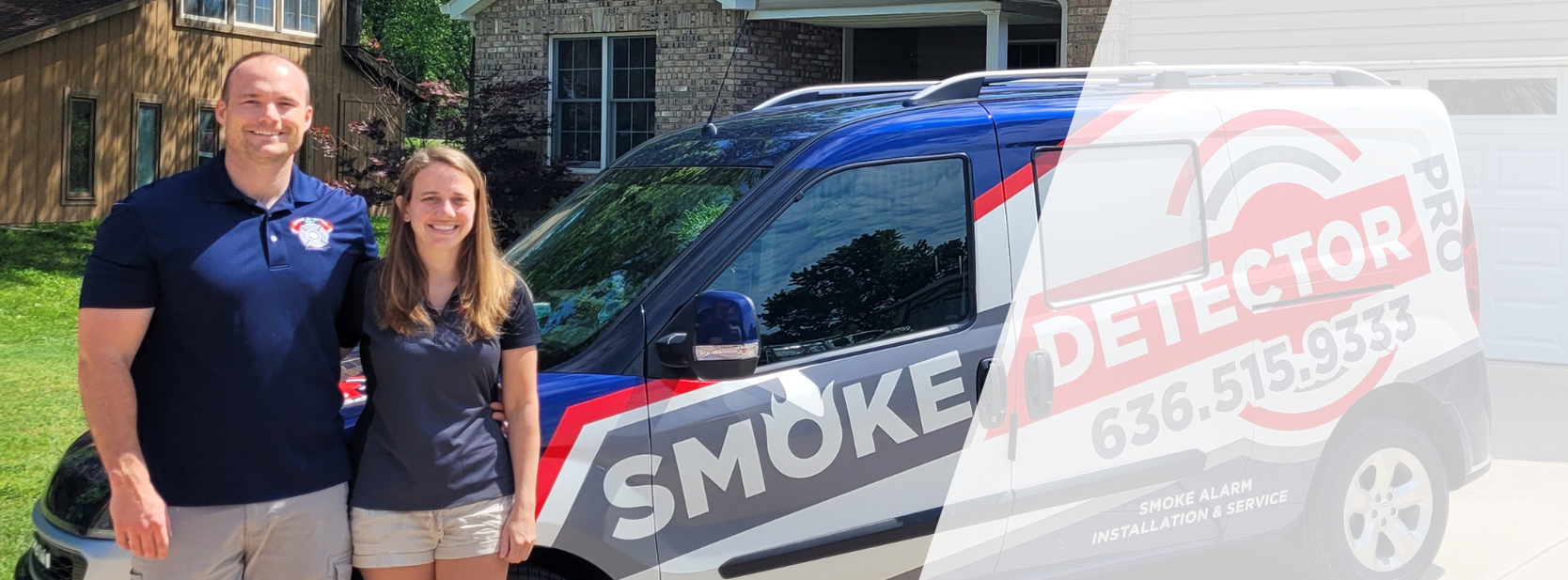
Smoke Detector Pro services
When homeowners need professional smoke alarm installation, they trust Smoke Detector Pro to deliver expert service that goes above and beyond.
Please contact us if you, a loved one, or neighbor need additional information.
Helpful Resources
If your smoke alarms are approaching 10 years of age—or you're not sure how old they are—it's a great time to have them inspected. At Smoke Detector Pro, our firefighter-owned team helps homeowners throughout St. Charles County, St. Louis County, and surrounding communities upgrade outdated smoke alarms, install code-compliant interconnected systems, and improve overall home fire safety.
About the Author
This article was written by the team at Smoke Detector Pro, a firefighter-owned and operated residential fire safety company serving St. Charles County, St. Louis County, and surrounding Missouri communities. Our mission is to help homeowners improve fire safety through professional smoke alarm installation, carbon monoxide protection, dryer vent cleaning, and home fire safety education.
